


















When senior Jackson Bonham first heard about the Auburn School District’s new personal electronic device policy, he thought it was unreal.
“I heard it from my mom and I didn’t believe her,” Jackson recalled.
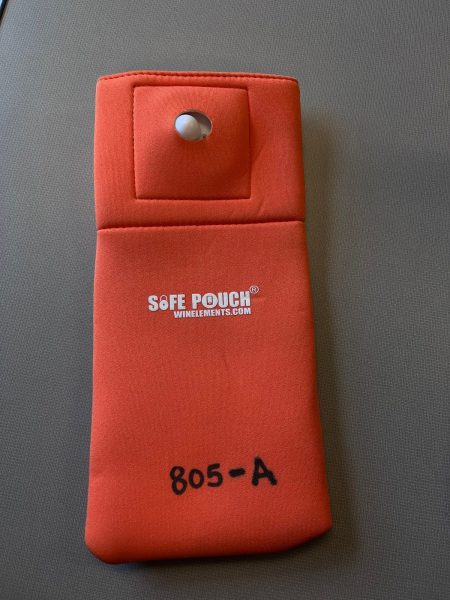
However, when he saw a teacher ask a student who was using their cell phone to place it into an orange pouch during an assembly the first week of school, he was shocked.
“Oh my God, it’s real.”
Once he realized the policy is in effect, he supported the idea.
“At first I was like, OK, maybe it would help me a lot with focusing and less distractions in class.”
That is exactly what the new cell-phone-free learning environment did for Jackson, who said he pays better attention in class now and lives more in the moment. Eliminating distractions is also what the new policy aims to do.
The Auburn School District implemented the new policy this year, prohibiting students to use personal electronic devices (PEDs) during instructional time. This includes cell phones, smart watches, ear buds and headphones.
The change is based on research that shows reducing phone use helps students improve “focus, academic performance, social connections and reduces bullying,” according to the district’s website. “We are committed to creating classrooms where students thrive distraction-free.”
The district surveyed families, students and staff about cell phone use in the spring of 2025. According to the data, the district stated 75 percent of students reported seeing other students using cell phones for inappropriate videotaping.
The school board approved the policy in August 2025.
“I think it’s for the better because students get more distracted when they have their phones,” Jackson said of the policy.
Though he likes the new policy, he said students should still be allowed to use their phones during class after they finish their school work.
Although the new personal electronic device policy has helped students like Jackson, it has also created challenges for other students.
Junior Alaya Barrcentes believes that this rule is “stupid” and should be removed.
“Because of the new PED policy, I have seen students be sneaky about using their phones while in class.”
Alaya said she got her phone pouched once but thinks that ever since she did, she just starts finding more ways to use it.
According to Auburn Riverside’s violation data tracker, there were 551 PED violations in the first quarter, most of which were phone violations. But as students are becoming more accustomed to the policy, there were only 32 violations later on in the second quarter.
Junior Warza Ibrahim also said she absolutely hates this rule.
“This rule should be demolished.” she said, noting that she can’t focus without her airpods in and finds classes unbearable without them. Warza thinks she learned way better before the district’s new policy, and her grades have gotten worse since she can’t listen to her calming audios.
“Listening to music helps me stay more focused in class and has calmed me down in crazy situations.”
But Warza’s frustration with the new policy extends beyond the classroom.
She said since the mirrors in the bathroom were removed earlier this year, she cannot fix her hijab in the bathroom. She also cannot go out into the hallways to fix her hijab for religious reasons, so this is why she thinks she should at least be able to take her phone to the bathroom so she can use the camera to fix her hijab.
In Flight also sent out a survey to students regarding the PED policy, in which 16 students responded to.
Eight students said they do not agree with the PED policy, including junior Stella Beyersdorf, who listed various reasons.
“They pouch you when you are on your phone in the hallway,” Stella responded. “The pouch is ugly (At least make it cute).”
Stella said her grades have never changed since the phone policy and the policy doesn’t matter because it’s not stopping anyone from going on their devices.
“This policy is stupid and they are over doing it with the ugly pouch, just take my phone for the class,” Stella wrote in the survey. “Just because you guys didn’t have access to the internet when you were in school doesn’t mean you gotta take it out on us.”
She added that she prefers the “red light, green light” policy that teachers used last year, in which teachers displayed signs to indicate whether students could use their phones during class.
One student in the survey agrees with the PED policy. That student, who requested not to be identified, stated the policy helps students focus during class and “actually listen to the teacher.”
Moreover, seven students in the survey responded “maybe – it’s complicated” regarding the policy.
Junior Ryker Nanninga stated he agrees with the policy, but he also believes the district could make some changes to it.
“You can see people are doing their work more, along with … talking to one another much more.”
However, Ryker stated aside from the policy’s positive impacts, administrators and district leaders should consider making some changes.
“I would tell them that they should change it so you can be pouched if you are on your PED when your teacher is teaching or if you have work you need to do unless you need to listen to music to concentrate, but if you have free time you should be allowed to be on your PED.”